Selecting heavy machinery is a critical decision for any construction or mining project. A bulldozer is a powerful tractor used for pushing, digging, and leveling materials. Choosing the wrong size can lead to higher costs or project delays. This guide explains how to choose bulldozer units that match your specific operational needs.
You must first evaluate your job site conditions and material types. Soft soil requires machines with low ground pressure to prevent sinking. Harder terrain demands higher operating weights for better penetration and stability. Understanding these variables ensures you select a machine that performs reliably.
Understanding Your Project Requirements
The scope of your project determines the ideal size of the machine. Small projects like residential landscaping require compact dozers for better maneuverability. Large-scale mining or highway construction requires heavy-duty models with massive pushing power. You should calculate the total volume of material you need to move daily.
Medium-sized dozers are often the most versatile choice for general construction. These machines typically weigh between 15,000 kg and 25,000 kg. They offer a balance of power and transportability across different job sites. How to choose bulldozer models depends heavily on this weight-to-power ratio.
Ground pressure is another essential metric for site compatibility. Standard dozers exert around 60 to 80 kPa of pressure on the ground. Low Ground Pressure (LGP) models are necessary for swampy or sandy environments. Always check the soil bearing capacity before finalizing your equipment selection.
Key Factors in How to Choose Bulldozer Models
Engine horsepower directly influences the machine’s ability to move heavy loads. Most medium-duty projects require engines producing between 120 kW and 160 kW. Higher horsepower allows for faster cycle times and increased productivity on steep slopes. Efficient engines also help reduce long-term operational costs through lower fuel consumption.
Operating weight is the second most important technical specification to consider. A heavier machine provides better traction for pushing dense or rocky materials. For example, a 17-ton machine is generally sufficient for road grading and site clearing. Matching machine weight to material density is the best way to choose a bulldozer.
The cooling system and transmission type also impact performance in harsh climates. Modern dozers often use hydrostatic drive systems for smoother speed transitions. These systems allow operators to control power to each track independently. This feature is vital for maintaining momentum during heavy turns.
Evaluating Blade Types and Performance
The blade is the primary tool used for moving earth and debris. Different blade shapes are designed for specific tasks like stripping, leveling, or pushing. Choosing the wrong blade can reduce your machine’s efficiency by over 20%. You must match the blade capacity to the engine’s pushing capability.
| Blade Type | Best Use Case | Material Movement |
| Straight Blade (S-Blade) | Fine grading and stripping | Low to medium |
| Universal Blade (U-Blade) | Moving large piles over long distances | High |
| Semi-U Blade (SU-Blade) | General construction and backfilling | Medium to high |
| Angle Blade | Side-casting and ditching | Medium |
The SU-blade is the most popular choice for general earthmoving projects. It combines the characteristics of the S-blade and the U-blade for versatility. Most medium dozers feature a blade capacity of approximately 4.0 to 5.0 cubic meters. Choosing a blade with the right capacity prevents engine strain and track slippage.
Assessing Maintenance and Operator Comfort
Long-term project success depends on machine uptime and operator performance. Modern bulldozer designs prioritize easy access to engine components and hydraulic filters. Routine maintenance checks should take minutes rather than hours to complete. Look for machines with centralized grease points and easy-to-read diagnostic panels.
Operator comfort directly impacts daily productivity and safety on the site. A pressurized cab with air conditioning reduces fatigue during long shifts. Ergonomic joystick controls allow for precise blade movements with minimal physical effort. High visibility is also crucial for preventing accidents in crowded work zones.
Fuel efficiency has become a primary concern for modern fleet managers. Advanced fuel injection systems can reduce consumption by up to 15% without losing power. How to choose bulldozer models involves comparing the total cost of ownership over several years. Lower fuel bills and maintenance costs often justify a higher initial purchase price.
Matching Technology with Site Demands
When deciding on a specific model, you must judge if the drive system fits your workflow. Hydrostatic transmission systems offer significant advantages for precision grading tasks. These systems eliminate the need for traditional gears, providing continuous power to the tracks. This technology is essential for projects requiring frequent direction changes.
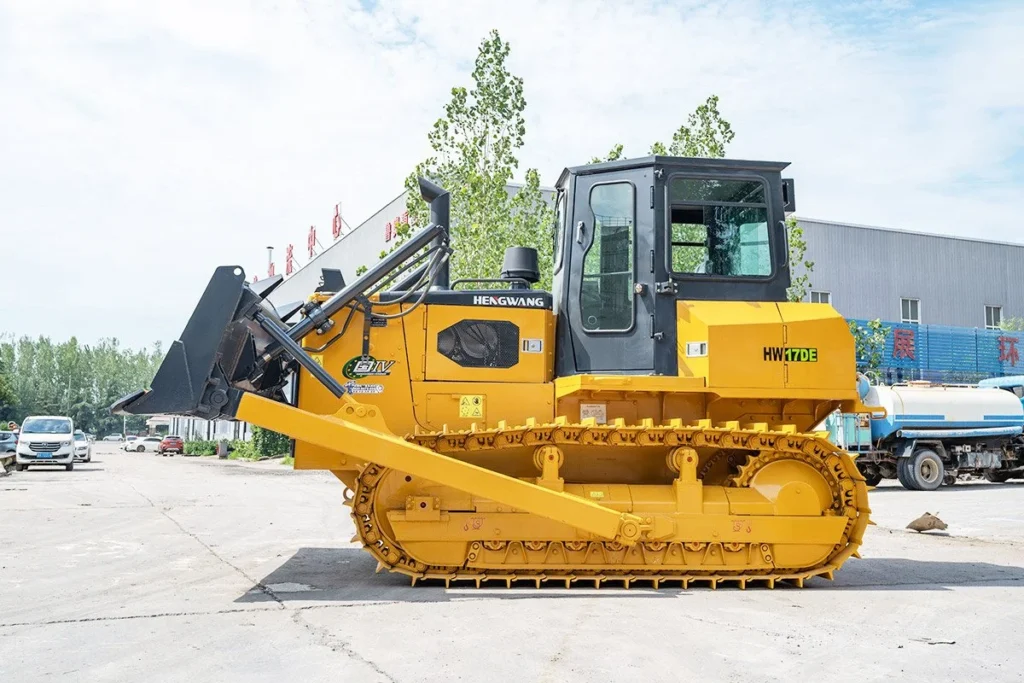
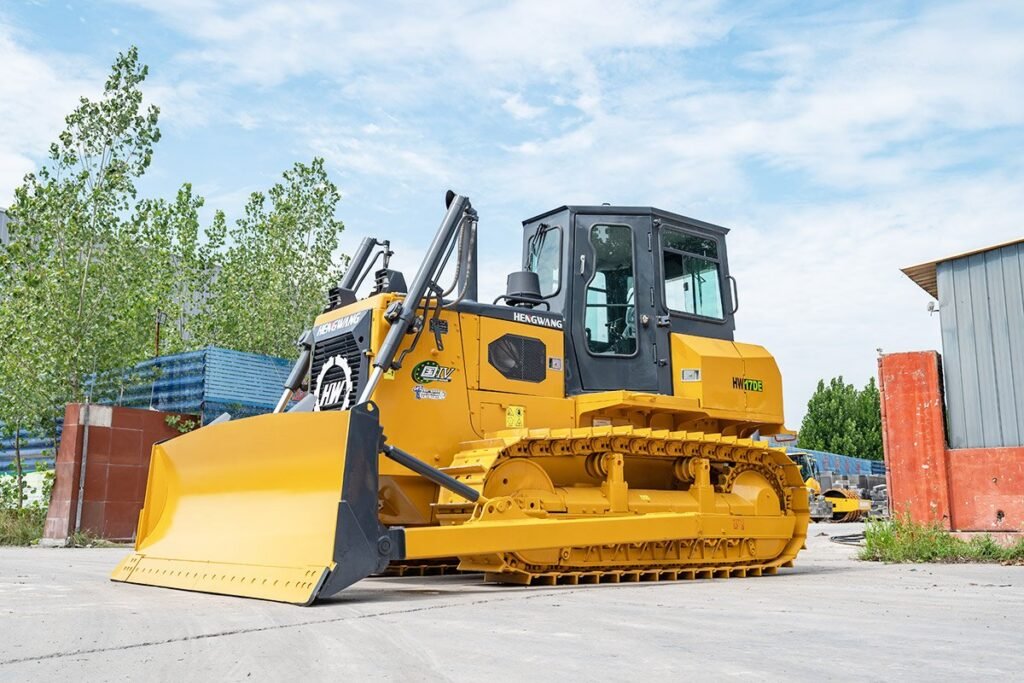
A 17-ton dozer like the Hengwang HW17DE represents a strategic choice for mid-sized projects. It features a Weichai WP10 engine that delivers 121 kW of power efficiently. This power level is ideal for balancing fuel economy with high-intensity earthmoving tasks. The machine’s 17,500 kg operating weight provides the stability needed for tough terrain.
The HW17DE uses a hydrostatic drive system to enhance maneuverability in tight spaces. Its 4.5 cubic meter blade capacity allows for significant material movement in each pass. Understanding these specifications helps you determine if this class of machine meets your deadlines. Selecting a machine with proven components ensures reliability across multiple project phases.
Summary
To how to choose bulldozer units correctly, you must align engine power with your site’s material density. Focus on operating weight, blade type, and fuel efficiency to maximize your return on investment. A mid-sized, hydrostatic machine often provides the best versatility for modern construction demands.
FAQ
Q:What is the most important factor when choosing a bulldozer?
The operating weight and engine power are the most critical factors for performance. You must ensure the machine has enough traction to push the required material volume.
Q:How do I decide between a standard and an LGP bulldozer?
You should choose an LGP (Low Ground Pressure) model if your site has soft or wet soil. Standard models are better suited for firm ground where high traction is needed.
Q:How do I decide between a standard and an LGP bulldozer?
You should choose an LGP (Low Ground Pressure) model if your site has soft or wet soil. Standard models are better suited for firm ground where high traction is needed.
Q:Why is hydrostatic drive beneficial for bulldozers?
Hydrostatic drive provides seamless speed control and better maneuverability than mechanical transmissions. It allows the operator to maintain full power during turns, increasing overall efficiency.
Q:What size bulldozer do I need for road construction?
Medium dozers weighing between 15 and 20 tons are typically best for road projects. They offer the right balance of pushing power for grading and transportability between sites.
Q:How does blade capacity affect productivity?
Higher blade capacity moves more material per pass but requires more engine horsepower. You must ensure your dozer’s engine can handle the weight of a full blade without stalling.
Reference Sources:
Association of Equipment Manufacturers (AEM)
https://www.aem.org/
For Construction Pros
https://www.forconstructionpros.com/