Choosing the right drilling rig distributor starts with understanding the project, not simply comparing machine prices. Contractors, dealers, and procurement teams may need to consider drilling depth, hole diameter, ground conditions, drilling method, delivery time, spare parts, and technical support before placing an order.
A supplier that looks competitive on price may not offer the same equipment configuration or level of support as another supplier. A structured comparison can make quotations easier to evaluate and help buyers identify potential costs before delivery.
Manufacturer vs. Distributor: What Is the Difference?
Manufacturers and distributors can serve different roles in an international equipment purchase.
A manufacturer may provide direct technical information, factory-level pricing, OEM options, and production support. A distributor may offer local inventory, regional logistics, spare-parts support, and service coordination.
The better option depends on the project. A contractor purchasing several machines may prefer direct communication with a drilling rig manufacturer, while a buyer operating in a market with limited technical resources may place more value on local service support.
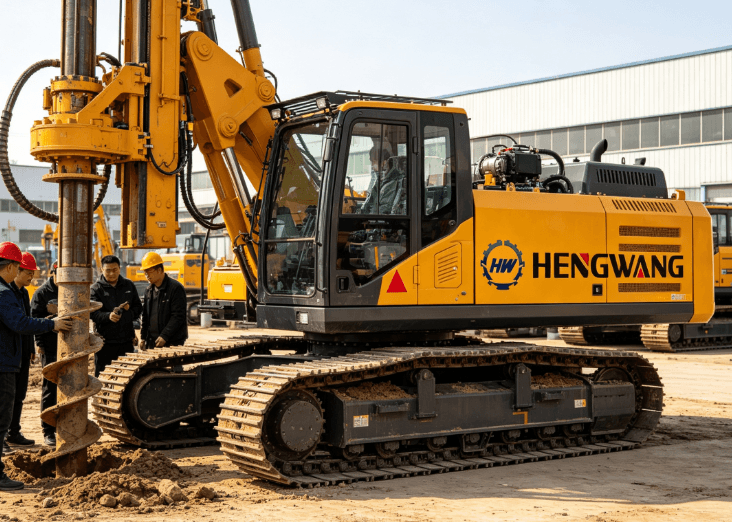
Before contacting suppliers, buyers can review the available equipment categories. HengWang, for example, provides hydraulic, pneumatic, DTH, and other drilling equipment through its drilling rig product category.
What to Check When Choosing a Drilling Rig Distributor
1. Match the Rig to the Drilling Application
Start with the project requirements rather than the machine price.
Define:
- Required drilling depth
- Target hole diameter
- Soil or rock formation
- Drilling method
- Site access and ground conditions
- Required mobility
- Available power supply
- Expected daily workload
For example, the HW-190L Hydraulic Drilling Rig can be considered when a project requires a hydraulic drilling configuration with a listed maximum drilling depth of 190 m.
For deeper drilling requirements, buyers can compare the XY-3T Hydraulic Drilling Rig, which is listed with a maximum drilling depth of 600 m.
These models illustrate why drilling depth should be considered together with hole diameter, drilling method, ground conditions, and the intended application.
2. Consider the Drilling Method and Formation
Different ground conditions may call for different drilling methods and tooling.
For projects where a pneumatic configuration is being considered, the HQZ-260L Pneumatic Drill Rig is one example to compare. The model is listed with a maximum drilling depth of 260 m and a drilling diameter range of 130–305 mm.
For geological investigation or sampling projects, buyers should also clarify the required sampling method and site conditions. ISO 22475-1:2021 provides principles for sampling soil, rock, and groundwater as part of geotechnical investigation.
The key is to match the equipment and drilling method to the site rather than assume that one rig configuration will work for every formation.
Key Supplier Evaluation Criteria
| Criteria | Why It Matters | What to Ask |
|---|---|---|
| Machine configuration | Determines whether the rig fits the application | Ask for the proposed model and complete specifications |
| Lead time | Affects mobilization and project scheduling | Request production and shipping estimates |
| Spare parts | Can affect downtime and maintenance | Ask for parts lists, availability, and delivery times |
| Technical support | Useful when equipment is operated overseas | Ask how installation, training, and troubleshooting are handled |
| Commercial terms | Influences procurement risk | Confirm MOQ, payment terms, and Incoterms |
| Documentation | Supports operation and import procedures | Request manuals, datasheets, packing and export documents |
| References | Helps assess experience with similar projects | Ask for comparable applications or customer references |
Don’t Compare Drilling Rig Price Alone
A lower quotation does not necessarily mean a lower project cost.
When comparing a drilling rig supplier, include the potential cost of:
- Machine purchase
- Freight and insurance
- Customs and import charges
- Installation and commissioning
- Operator training
- Drill pipes, bits, and other consumables
- Spare parts
- Routine maintenance
- Technical support
For example, two rigs may have similar purchase prices but different drilling capabilities, power systems, tooling requirements, or spare-parts costs.
Requesting quotations based on the same technical specification makes this comparison much easier.
.png)
Questions to Ask a Drilling Rig Distributor
Before requesting a final quotation, prepare a short list of technical and commercial questions:
- Which model matches the required drilling depth and diameter?
- What drilling method is recommended for the expected formation?
- What is the expected production lead time?
- Which spare parts and consumables are included?
- What technical support is available after delivery?
- Can manuals and technical documents be supplied in the required language?
- What are the payment terms and applicable Incoterms?
- What inspection or testing is completed before shipment?
- Can the supplier provide references for similar applications?
Safety requirements should also be considered during equipment selection and operation. For example, OSHA’s drilling guidance covers activities and safety considerations associated with drilling operations.
Where foundation drilling equipment is involved, buyers can also review relevant safety information from NIOSH.
These resources do not replace local regulations or project-specific safety procedures, but they can provide useful background when discussing equipment operation and site requirements with suppliers.
A Practical Sourcing Process
A simple procurement workflow can help keep supplier comparisons consistent.
Step 1: Define the project
Record drilling depth, diameter, formation, drilling method, site access, power supply, and expected workload.
Step 2: Identify suitable suppliers
Compare manufacturers and distributors that can provide the required drilling configuration.
Step 3: Request comparable quotations
Give each supplier the same technical requirements and ask for clearly itemized commercial terms.
Step 4: Compare total cost
Consider transportation, tooling, spare parts, training, maintenance, and after-sales support in addition to the machine price.
Step 5: Confirm the purchase details
Document the final machine configuration, delivery schedule, inspection requirements, warranty terms, and spare-parts arrangements before signing the order.
Compare Drilling Rig Options Before You Request a Quote
Product-level comparison can help buyers determine whether a supplier’s equipment range matches the project.
For a hydraulic drilling requirement, a buyer might compare the HW-190L Hydraulic Drilling Rig with a deeper-capacity option such as the XY-3T Hydraulic Drilling Rig.
If the project calls for a pneumatic configuration, the HQZ-260L Pneumatic Drill Rig provides another model for consideration.
Buyers can review the broader HengWang drilling rig range before contacting the manufacturer or distributor. The purpose is not to select a model based on one headline specification, but to identify equipment that fits the actual drilling conditions and project requirements.
Final Checklist for Selecting a Drilling Rig Supplier
Before making a decision, confirm:
- Required drilling depth and diameter
- Suitable drilling method
- Ground and site conditions
- Machine configuration
- Production and delivery lead time
- Spare-parts availability
- Technical support
- Operation and maintenance documentation
- Payment terms and Incoterms
- Warranty and inspection arrangements
- Total landed cost
A practical supplier evaluation should connect equipment capability, site conditions, operating requirements, and total procurement cost. Comparing these factors together can give contractors and procurement teams a clearer basis for choosing a drilling rig supplier or distributor.
FAQs
How do I evaluate a drilling rig distributor?
Compare the supplier’s equipment range, technical support, lead times, spare-parts availability, documentation, commercial terms, and experience with similar projects.
Should I buy directly from a manufacturer or through a distributor?
It depends on the project and destination market. Direct purchasing may simplify communication with the factory, while a distributor may provide local service, inventory, or logistics support.
What information should I provide when requesting a drilling rig quotation?
Provide the required drilling depth and diameter, ground conditions, drilling method, site access, available power supply, expected workload, destination country, and delivery requirements.
How important are spare parts when buying a drilling rig overseas?
Spare-parts availability can affect maintenance and downtime, particularly when equipment is operating far from the supplier. Ask for a recommended spare-parts list, pricing, availability, and estimated delivery times.
Where can I compare drilling rig models?
Start with the supplier’s product range and then compare individual machines against your project requirements. HengWang’s drilling rig category provides an overview of different drilling equipment configurations.
When should I contact a drilling rig manufacturer?
It is useful to contact manufacturers after defining the basic technical and commercial requirements. Providing clear information about depth, diameter, formation, drilling method, destination, and expected workload allows the supplier to recommend a more relevant configuration and prepare a more comparable quotation.