Choosing a rotary drilling rig manufacturer involves more than comparing machine prices. For contractors, distributors and international buyers, the right comparison should include machine configuration, application fit, delivery capability, spare-parts support and commercial terms.
A clear supplier evaluation process also makes RFQs easier to compare and can help avoid unexpected costs after delivery.

What to Look for in a Rotary Drilling Rig Manufacturer
Before contacting manufacturers, define the basic requirements of your project. This gives suppliers enough information to recommend a suitable configuration rather than quoting a standard machine without considering the application.
Key factors include:
- Required drilling diameter and depth
- Soil and rock conditions
- Required torque and crowd force
- Site access and ground-bearing conditions
- Compatible drilling tools
- Machine transport requirements
- Spare-parts availability
- Delivery, warranty and service terms
If you have a geotechnical report, project drawings or information from a similar job, include the relevant details in your RFQ.
Technical Criteria for Comparing Suppliers
1. Check the Machine Configuration
Do not compare drilling rigs only by model name. Ask each rotary drilling rig supplier for a technical datasheet covering the main operating parameters.
Depending on the application, these may include:
- Rated torque
- Maximum drilling diameter
- Maximum drilling depth
- Crowd force
- Engine and hydraulic system
- Operating weight
- Mast configuration
- Kelly bar and tooling options
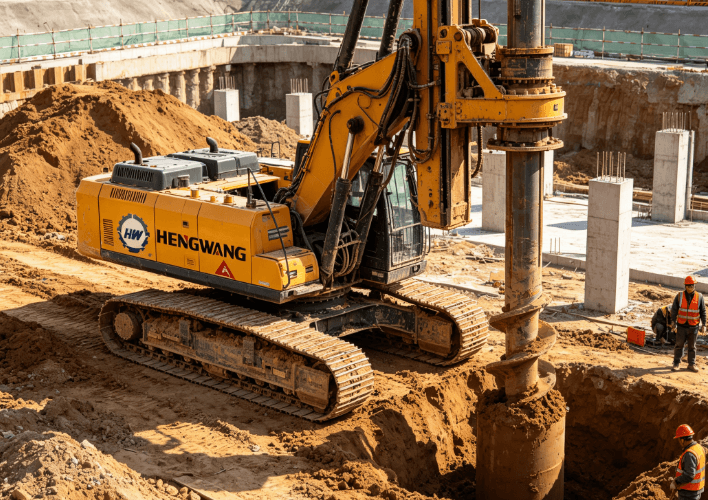
HengWang’s drilling rigs category provides examples of different equipment configurations, including rotary pile drivers, hydraulic drilling rigs and anchoring drilling rigs. Reviewing several machine types can help buyers narrow down the specifications they actually need.
2. Match the Rig to the Application
The application should come before the model. A rig suitable for foundation piling may not be the best choice for water-well drilling or anchoring work.
For example, a Crawler Rotary Pile Driver can be considered for tracked foundation and piling applications. The Crawler Rotary Pile Driver listed by HengWang has a maximum drilling diameter of 1,200 mm, maximum drilling depth of 15 m and rated power of 86 kW. These figures can be used as a starting point for comparison, but buyers should still check them against the project’s pile design, ground conditions and tooling requirements.
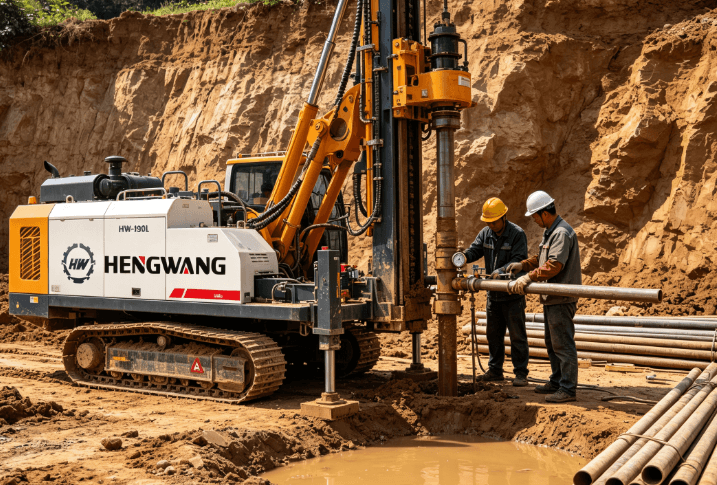
For water-well, geological exploration or other medium-depth drilling work, a hydraulic drilling rig may be more appropriate. The HW-190L Hydraulic Drilling Rig is listed with a maximum drilling depth of 190 m and a drilling diameter range of 75–500 mm. This illustrates why the intended application should be defined before comparing manufacturers.
For anchoring and slope-stabilization projects, an HWMG-12M Anchoring Drilling Rig is another example to consider. Its listed drilling depth is 0–50 m, with a maximum drilling diameter of 300 mm. Buyers can use these specifications to start a discussion about drilling depth, hole diameter and site requirements.
3. Consider Tooling and Spare Parts
A drilling rig is only one part of the operating system. Before ordering, confirm which tools and consumables are compatible with the proposed machine.
Depending on the application, ask about:
- Kelly bars
- Drill buckets
- Augers
- Core barrels
- Casing tools
- Drill pipes
- Hydraulic components
- Wear parts
It is also useful to request a recommended initial spare-parts package. For equipment operating far from the supplier’s service center, having frequently replaced components available locally may help reduce downtime.
Supplier Evaluation Checklist
Use the same questions for each supplier so quotations can be compared on a consistent basis.
| Criteria | Buyer Question | Priority | Evidence to Request |
|---|---|---|---|
| Product range | Does the supplier offer a suitable rig configuration? | High | Product catalog and datasheets |
| Application experience | Have they supplied similar equipment? | High | Project references or case information |
| Spare parts | What are the typical lead times? | High | Parts list and supply policy |
| Factory testing | What checks are completed before shipment? | High | FAT or inspection checklist |
| Export experience | Can the supplier provide the required documents? | Medium | Export references |
| Warranty | What components and conditions are covered? | High | Written warranty terms |
| Training | What operator or maintenance training is available? | Medium | Training scope |
| Commercial terms | What are the payment and delivery conditions? | High | Formal quotation |
The checklist is useful for identifying differences between quotations. One supplier may include tooling, spare parts or factory testing while another quotes only the base machine, making direct price comparisons difficult.
Factory Inspection and International Shipping
For overseas purchases, inspection requirements should be agreed before the final contract is signed.
A factory acceptance test (FAT) may cover:
- Machine dimensions
- Engine and hydraulic operation
- Control functions
- Drilling-system operation
- Safety-related checks
- Documentation
If visiting the factory is not practical, an independent inspection can also be considered.
For quality-management requirements, buyers can refer to the International Organization for Standardization (ISO) for information about ISO 9001. Certification can be one part of supplier assessment, but it does not replace inspection of the actual machine.
Shipping details should also be confirmed in advance, including packed dimensions, machine weight, export packaging, shipping terms and customs documentation.
What to Include in a Rotary Drilling Rig RFQ
A detailed RFQ usually produces more useful quotations than a short request for a machine price.
Include:
- Project location and application
- Required drilling diameter and depth
- Ground conditions
- Required drilling tools
- Machine configuration
- Delivery destination and target date
- Spare-parts requirements
- Inspection and FAT requirements
- Warranty expectations
- Training requirements
Ask manufacturers to quote the same basic configuration and list optional equipment separately. This makes it easier to identify what is actually included in the quoted price.
After-Sales Support and Total Cost
Purchase price is only one part of the equipment cost.
Before selecting a manufacturer, ask how technical support is handled after delivery and whether the supplier has dealers, service partners or direct support in your market.
For critical components, ask for estimated shipping times rather than simply confirming that spare parts are “available.”
Training should also be clarified. Depending on the project, this may include operator instructions, maintenance guidance, commissioning support or remote technical assistance.
For general workplace safety considerations, buyers can also consult OSHA’s drilling safety guidance when developing operating and maintenance requirements.
How to Shortlist a Rotary Drilling Rig Manufacturer
After receiving quotations, compare suppliers using the same technical and commercial criteria.
A practical shortlist can focus on four questions:
- Does the proposed rig match the project requirements?
- Are specifications and included equipment clearly stated?
- Can the supplier support spare-parts and service requirements?
- Are delivery, inspection, warranty and payment terms documented?
If HengWang is being considered as one potential supplier, its drilling rig product range provides an entry point for comparing available equipment. Buyers can then contact the manufacturer for current specifications, configuration options and a project-specific quotation.
The final decision should be based on the complete technical and commercial proposal rather than the lowest quoted price alone.
Frequently Asked Questions
How do I choose the right rotary drilling rig?
Start with drilling depth, diameter, ground conditions, pile requirements and site access. Share these details with several manufacturers and compare their proposed configurations.
What should I ask a rotary drilling rig manufacturer?
Request technical specifications, compatible tooling, delivery time, spare-parts information, warranty terms, factory testing procedures and after-sales support details.
Should I inspect the rig before shipment?
For international orders, a factory acceptance test or third-party inspection can provide an additional check that the equipment matches the agreed specification before shipment.
What documents should I request?
Typical documents include technical datasheets, operator manuals, parts lists, inspection records, packing lists and export documents. Additional certificates may depend on the destination market.
How should I compare supplier quotations?
Use the same specification and scope of supply for each quotation. Compare equipment, tooling, delivery, warranty, spare parts and support together rather than focusing only on the initial machine price.
Final Takeaway
Sourcing a rotary drilling rig is easier when project requirements are defined before supplier selection begins.
Prepare a clear RFQ, compare equivalent machine configurations and confirm inspection, spare-parts, delivery and warranty terms in writing. Reviewing specific products alongside the manufacturer’s wider equipment range can also help buyers determine whether the supplier has a suitable solution for the project.