How does an excavator work? A hydraulic excavator converts engine power into pressurized oil flow, then uses valves to send that flow to cylinders and hydraulic motors. The cylinders move the boom, arm, and bucket; the motors swing the upper structure and drive the tracks or wheels. The operator controls both the direction and amount of oil flow, so the machine can dig, lift, swing, and travel with measured force and speed. [1]
That simple description is the excavator working principle in practice: energy starts at the engine, moves through a hydraulic pump and control valves, becomes linear force in cylinders or rotary motion in motors, and finally reaches the tool at the end of the work equipment. The machine’s structure and operator inputs determine where that force goes. Exact ratings, lift capacities, attachment compatibility, and configuration limits vary by model and must be confirmed from the relevant operator manual and manufacturer documentation.
What Are the Main Parts That Make an Excavator Work?
An excavator combines a mobile undercarriage, a rotating upper structure, a front work group, and a hydraulic power-and-control system. The counterweight and undercarriage give the machine a stable base; the upper structure carries the engine, pumps, cab, and swing system; and the boom, arm, and bucket position the load. These sections must work together, rather than as independent mechanisms.
| System or component | Primary job | What the operator sees |
|---|---|---|
| Engine and hydraulic pumps | Provide mechanical input and pressurize the hydraulic fluid. | Available response depends on engine speed, selected mode, and hydraulic demand. |
| Main control valves and hoses | Meter and direct oil to the requested function. | Joystick or travel-pedal input becomes a controlled machine movement. |
| Boom, arm, and bucket cylinders | Convert oil pressure into linear push or pull. | The front equipment raises, reaches, curls, dumps, or digs. |
| Swing motor and bearing | Rotate the upper structure relative to the undercarriage. | The cab and attachment turn toward the truck, trench, or spoil pile. |
| Travel motors and undercarriage | Move the machine across the ground. | Tracks or wheels propel and steer the excavator. |
| Bucket or approved attachment | Engage soil, material, or a task-specific work surface. | The tool performs digging, loading, grading, lifting, or another approved task. |
For a high-level view of available configuration types, the HengWang excavator range lists crawler, mini, and wheel excavator categories. This categorization is useful for orientation, but it does not replace checking the model-specific manual, specification sheet, and attachment approval for a job.
How Does the Excavator Hydraulic System Transfer Power?
The excavator hydraulic system uses an engine-driven pump to draw hydraulic fluid from the tank and create flow under pressure. When the operator moves a control, the main control valve routes oil to a selected cylinder or motor. The actuator then moves, while return oil travels back through the circuit for conditioning and reuse. Volvo Construction Equipment describes the same general chain as pump action, directional control, and cylinders or motors converting fluid energy into motion. [1]
Two related ideas matter when interpreting machine response. Pressure is associated with the force available at an actuator, while flow is associated with how quickly fluid volume is delivered and therefore how fast a motion can occur. A productive cycle needs both, but operators should not equate faster movement with more digging force. The control system, load, attachment, engine speed, relief settings, and active functions all affect what happens at the tool. [1]
A cylinder has two oil chambers. Directing oil to one side extends the rod; directing oil to the other retracts it. In the front work group, that push-pull motion raises or lowers the boom, changes the arm reach, and curls or opens the bucket. Hydraulic motors use the same fluid-power source to create continuous rotation for swing and travel. This is why one machine can combine linear movements and rotary movements without a separate mechanical drive for every function.
How an Excavator Works Through a Digging and Loading Cycle
In a typical trenching or loading cycle, the operator first positions the undercarriage on suitable ground and places the upper structure so the work can be completed without unnecessary travel or extreme reach. The boom lowers, the arm draws the bucket through the material, and the bucket cylinder curls the cutting edge and bucket to retain the load. The operator then raises the front equipment, swings the upper structure to the discharge point, opens the bucket, and swings back for the next pass.
These motions are often blended rather than performed one at a time. For example, the operator may raise the boom while retracting the arm and beginning the swing. Hydraulic circuits are designed to apportion flow among requested functions, but the exact response differs across machine designs and work modes. Smooth, repeatable control is therefore a combination of the machine’s hydraulic design, its configuration, and operator technique—not simply the size of the bucket or engine.
Soil, slope, bucket fill, reach, and swing direction all change the load on the machine. A bucket that is too large for the material or an attachment that has not been approved for the machine can make the cycle less controlled and can alter stability. Contractors should use the applicable load charts, attachment instructions, and local site rules rather than assume that a familiar task is within the capability of every excavator.
What Controls Boom, Arm, Bucket, Swing, and Travel?
Modern layouts vary, so an operator must learn the controls for the specific machine from its manual and formal training. In general, hand controls command boom, arm, bucket, and swing functions; travel levers or pedals command the left and right travel motors. The main control valves interpret these inputs by metering hydraulic oil to the relevant circuits. A small control movement may command a small valve movement and a gentler actuator response, while a larger input can request more flow.
| Requested function | Hydraulic action | Typical result |
|---|---|---|
| Boom raise/lower | Oil is directed to the boom cylinder on the required side. | The attachment rises for clearance or lowers to engage material. |
| Arm crowd/dump | The arm cylinder extends or retracts. | The bucket moves toward or away from the cab to control reach and digging path. |
| Bucket curl/open | The bucket cylinder changes position through its linkage. | The cutting edge engages material, then the bucket retains or releases it. |
| Swing | The swing motor receives controlled oil flow. | The upper structure rotates while the undercarriage remains in position. |
| Travel | Travel motors receive flow on the requested side. | The machine moves or steers through track or wheel motion. |
For engineering students, the key point is that the excavator is a coordinated fluid-power system. A control valve does more than switch a movement on or off: it meters flow and helps manage multiple demands. For operators, the practical point is to keep motions deliberate, avoid abrupt reversals under load, and follow the controls and limits specified for the actual machine.
Where Are the Working Limits and Safety Boundaries?
The answer to how an excavator works is incomplete without the operating environment. The rotating upper structure creates a swing zone, and people caught between it and the undercarriage or another object can be seriously injured. OSHA identifies this as a recognized excavation-industry hazard and calls for instruction and measures such as barricades, warning lines, or other recognized procedures to prevent people entering the swing radius. [2]
Before work begins, the responsible team should establish a suitable travel and setup area, identify ground and excavation-edge conditions, inspect the machine according to its manual, manage people around the work zone, and confirm the task and attachment are authorized. Site-specific conditions, national rules, underground services, lifting plans, and the operator manual control the actual safe method; this guide is not a substitute for them.
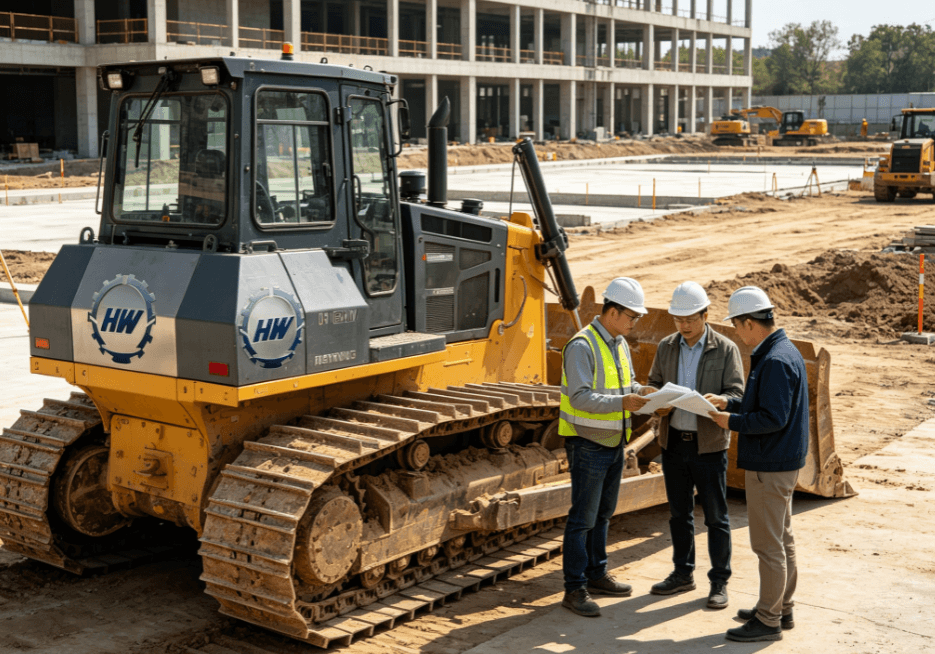
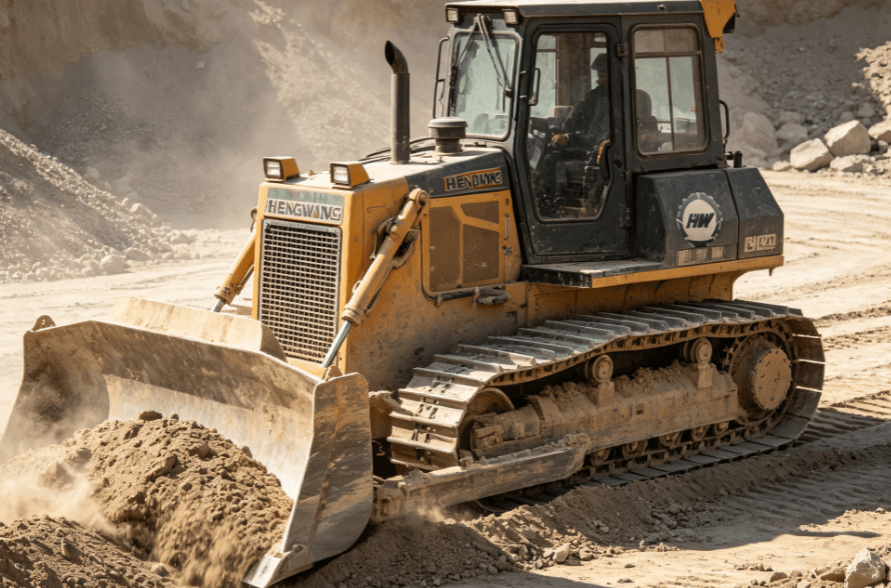
Excavators and bulldozers both move earth, but they work differently. An excavator digs and loads through a rotating upper structure and a hydraulically articulated front work group, while a bulldozer primarily pushes, spreads, or grades with a front blade. For a simple category-level comparison, see HengWang’s crawler bulldozer range.
Frequently Asked Questions
Does an excavator use hydraulics for every movement?
The engine supplies the initial power, and the hydraulic system supplies controlled fluid power to the main work functions. Hydraulic cylinders move the boom, arm, and bucket, while hydraulic motors provide rotary motion for functions such as swing and travel. The exact system layout differs by model. [1]
What is the difference between hydraulic pressure and flow?
Pressure is closely related to the force an actuator can develop, while flow is closely related to movement speed. Both are needed for useful work, but actual digging and lifting capability also depend on geometry, load, machine settings, attachment, and the manufacturer’s published limits. [1]
Can an excavator dig and swing at the same time?
Many hydraulic excavators are designed to combine functions, such as raising, arm movement, and swing. Whether the response is appropriate for a particular task depends on the machine’s control system, current demand, load, and operating instructions. Operators should use the designated controls and work modes for their machine.
Why does the upper structure rotate while the tracks stay still?
A swing motor rotates the upper structure on its bearing relative to the undercarriage. This lets the operator place excavated material or load a truck without moving the entire machine after every bucket pass.
What should be checked before operating an excavator?
Use the machine’s pre-start procedure and job plan. At a minimum, confirm that the work area, machine condition, approved attachment, people-management controls, and task limits have been assessed. Keep people out of the swing radius using the controls required for the site. [2]
Key takeaway: An excavator works by turning engine output into controlled hydraulic power. Pumps create flow, valves direct it, cylinders move the front equipment, and hydraulic motors rotate or propel the machine. Once you understand that energy path, the digging cycle and the machine’s limits become easier to evaluate. When comparing configurations, begin with the intended task and then review the relevant HengWang excavator category alongside the model-specific manual, technical documentation, and manufacturer confirmation.
References
- Volvo Construction Equipment. “Understanding Excavator Hydraulics: Part 1.” 19 May 2025. Accessed 18 August 2026.
- Occupational Safety and Health Administration. “Safety procedures associated with the use of wheel or track propelled excavators.” 23 February 1994. Accessed 18 August 2026.
Scope note: Machine-specific capacities, hydraulic settings, attachment compatibility, stability limits, pricing, lead time, certifications, and jobsite suitability are not stated here and require confirmation from the applicable manufacturer documentation and responsible site team.