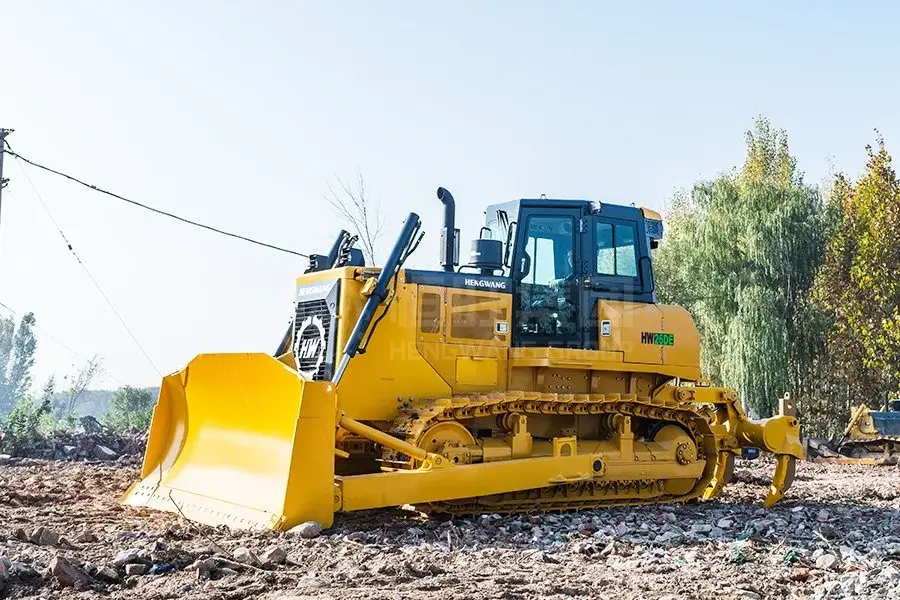
A bulldozer maintenance checklist is a structured daily inspection and servicing routine designed to prevent equipment failure, reduce undercarriage wear, and ensure operator safety. A standard daily dozer inspection covers engine and hydraulic fluid levels, ground-engaging tools (GET) wear, track tension, hydraulic cylinder seals, and in-cab safety controls. Because crawler dozers operate in highly abrasive and high-impact environments, adhering strictly to a daily checklist and a long-term preventive maintenance schedule minimizes unscheduled downtime and controls total operating costs.
Why a Daily Dozer Inspection Matters
In the heavy earthmoving industry, equipment repair costs dictate project profitability. The undercarriage alone can account for up to 50% of a tracked bulldozer’s total owning and operating costs. Operating a dozer with packed mud in the tracks, improper track sag, or a leaking final drive seal can destroy components worth tens of thousands of dollars within a single shift.
A daily walk-around inspection allows operators to identify loose bolts, weeping cylinder seals, or frayed hoses before they fail under load. Furthermore, strict daily inspections are mandated by safety organizations like OSHA to ensure heavy machinery does not pose a hazard to site personnel.
Tools and PPE Required for Dozer Maintenance
Before starting a daily inspection, an operator or technician should have the appropriate gear. Inspecting a dozer safely requires more than a visual glance.
- Personal Protective Equipment (PPE): Hard hat, steel-toed boots, safety glasses, and high-visibility clothing. Leather gloves are essential when handling wire cables or hot engine components.
- Grease Gun: Required for lubricating blade and ripper pivot points.
- Clean Rags: Necessary for wiping dirt away from dipsticks and fluid sight glasses to prevent contaminating internal systems.
- Flashlight: Critical for inspecting deep within the engine compartment, under the belly pans, and checking inside the final drive housing area.
- Spade or Track Spade: Used to manually dig out compacted mud and debris from the undercarriage rollers and sprockets.
The Daily Pre-Start Bulldozer Maintenance Checklist
Operators must complete this walk-around checklist before turning the ignition key. Park the machine on level ground, lower the blade and ripper to the dirt, and ensure the parking brake is engaged.
Ground Engaging Tools (GET) and Blade Inspection
The blade and ripper take the initial impact of moving material. Inspecting them ensures maximum pushing efficiency and prevents structural damage to the machine’s C-frame.
- Cutting Edges and End Bits: Check for excessive wear. If the wear reaches the mounting bolts, the edge must be flipped (if reversible) or replaced immediately to prevent permanent damage to the blade moldboard.
- Ripper Shanks and Tips: Check the ripper points for dullness or breakage. Ensure all retainer pins are securely locked in place.
- Trunnions and Pivot Points: Inspect the blade trunnions (where the blade attaches to the frame). Apply grease to the designated fittings, but avoid over-greasing, as excess grease attracts abrasive dirt and forms a grinding paste that accelerates pin wear.
Undercarriage and Track Inspection
Because the undercarriage represents the highest maintenance expense, this area requires careful daily scrutiny.
- Track Tension (Sag): Track tension must be adjusted based on terrain. Allow the machine to coast to a stop naturally; braking aggressively pulls the track tight on one side and gives a false reading. Measure the sag between the front idler and the carrier roller. If operating in mud, tracks should generally run slightly looser to accommodate material packing.
- Rollers and Idlers: Look for fresh oil weeping from the upper and lower rollers. A leaking seal will quickly drain the component of lubricating oil, causing bearing failure.
- Sprockets and Track Shoes: Inspect sprocket teeth for sharp, pointed wear (a sign of overly tight tracks). Check track shoes for missing or loose bolts.
- Debris Removal: Ensure no large rocks or frozen mud chunks are lodged between the track links and the sprocket.
Engine Compartment and Fluid Levels
Always check fluids when the machine is cold, or at least 15 minutes after shutdown to allow oil to return to the oil pan.
- Engine Oil Level: Wipe the dipstick area clean before opening. Pull the dipstick, wipe it, reinsert, and check. Keep the level between the ADD and FULL marks. Do not overfill, as this causes oil foaming.
- Engine Coolant: Check the coolant level via the clear sight glass on the radiator or expansion tank. Never remove a hot radiator cap.
- Fuel Water Separator: Modern high-pressure common rail (HPCR) diesel engines are highly sensitive to water. Drain the water separator bowl daily. Even microscopic water droplets can cause injector cavitation.
- Air Filter Pre-Cleaner: If the machine is equipped with a cyclonic pre-cleaner or dust bowl, empty it. Do not remove the primary air filter for a visual check unless the air restriction indicator signals a blockage; breaking the seal unnecessarily increases the risk of engine dusting.
Hydraulic System and Drivetrain
The hydraulic system provides the pushing and lifting force, while the drivetrain multiplies engine torque.
- Hydraulic Fluid: Check the hydraulic tank sight gauge. The blade and ripper must be resting flat on the ground. If the cylinders are left extended or raised, fluid is stored in the cylinders, resulting in a false “low” reading on the tank.
- Cylinders and Hoses: Inspect the blade lift, tilt, and pitch cylinders for scored rods or leaking wiper seals. Look for dry rot or abrasions on exposed hydraulic hoses.
- Final Drives: Look behind the sprockets for any signs of heavy gear oil leaks. The final drive reduces RPM and multiplies torque; operating it without oil will cause catastrophic planetary gear failure.
In-Cab Controls and Safety Checklist
Once the exterior walk-around is complete, the operator must verify the safety and control systems inside the cab.
- ROPS/FOPS Structure: Ensure the Roll-Over and Falling Object Protective Structures have no unauthorized welds, cracks, or modifications that could compromise their integrity.
- Seat Belt and Seat: Check the seat belt for fraying or mechanism failure. Heavy equipment seat belts usually require replacement every three years regardless of appearance.
- Visibility: Clean the windshield and mirrors. Test the backup cameras and monitors if equipped.
- Alarms and Lights: Turn on the master switch. Test the horn, backup alarm, and working lights. The backup alarm is a critical OSHA requirement on active job sites.
- Gauges and Indicators: After starting the engine, let it idle. Watch for warning lights and ensure the engine oil pressure registers within seconds.
End-of-Shift Post-Operation Maintenance
Maintenance does not end when the engine shuts off. A brief end-of-shift routine prepares the dozer for the next day.
- Refuel the Tank: Always fill the diesel tank at the end of the shift. As a hot, partially empty fuel tank cools overnight, it draws in humid air. Water condenses on the steel walls and sinks into the fuel. Refueling displaces the air and prevents condensation.
- Clean the Undercarriage: Use a track spade to dig out mud, clay, and debris. If mud is left in the undercarriage overnight in cold climates, it will freeze solid. Moving the machine the next morning with frozen tracks will instantly tear the seals out of the rollers and idlers.
- Proper Parking: Park on level ground, lower the blade and ripper completely, engage the parking brake, and let the engine idle for 3 to 5 minutes before shutdown. This allows the turbocharger to cool down while still receiving oil lubrication.
Standard Preventive Maintenance (PM) Schedule for Bulldozers
While daily inspections catch immediate hazards, a structured Preventive Maintenance (PM) schedule replaces degrading fluids and filters. Always refer to your specific manufacturer’s Operation and Maintenance Manual (OMM), as exact hour intervals vary by model, engine tier, and fluid type.
| Interval | Service Level | Key Maintenance Actions and Replacements |
| 10 – 50 Hours | Daily / Weekly | Visual walk-around, check all fluid levels, grease blade and ripper pivot pins, drain fuel water separator, clear undercarriage debris. |
| 250 Hours | PM 1 | Change engine oil and filter. Take S•O•S (Scheduled Oil Sampling) fluid samples. Inspect alternator and fan belts. Check final drive oil levels. |
| 500 Hours | PM 2 | Replace primary and secondary fuel filters. Replace cab fresh air and recirculation filters. Clean battery terminals. |
| 1000 Hours | PM 3 | Replace hydraulic system filters. Replace transmission/powertrain filters. Replace engine and powertrain breathers. Check pivot shaft oil level. |
| 2000 Hours | PM 4 | Drain and replace hydraulic oil. Drain and replace powertrain oil. Drain and replace final drive oil. Check and adjust engine valve lash. |
Note: The use of advanced synthetic fluids (such as Cat HYDO Advanced) and strict adherence to oil sampling can safely extend hydraulic oil change intervals to 3,000 or 4,000 hours under specific operating conditions.
Recognizing Early Warning Signs During Inspections
Experienced operators and mechanics use the daily checklist to listen and feel for early failure signs.
- Spongy Blade Controls: If the blade stutters or drops slightly when a hydraulic command is given, it often indicates air in the hydraulic system or failing cylinder packings.
- Excessive Exhaust Smoke: Continuous white smoke in a warmed-up engine indicates internal coolant leaks (potential head gasket failure). Heavy black smoke suggests a restricted air intake or faulty fuel injectors.
- Metallic Flakes in Oil: When checking final drive or powertrain oil levels, any presence of silver or brass-colored metallic flakes on the dipstick or magnetic plug indicates imminent gear or bearing failure. The machine should be grounded immediately.
Common Dozer Maintenance Mistakes to Avoid
Even with a checklist, certain maintenance habits can do more harm than good.
- Ignoring Track Packing: Allowing clay or debris to tightly pack the track chains increases the effective diameter of the sprocket. This acts as a wedge, pulling the track chain tighter than its design limit and rapidly wearing the bushings.
- Tapping Air Filters: Never remove a paper air filter and knock it against the machine’s tracks to dislodge dust. This warps the filter seal and creates micro-tears in the paper. Once the seal is compromised, raw silica dust bypasses the filter and destroys the engine cylinders within hours.
- Mixing Incompatible Fluids: Adding generic hydraulic fluid to a system designed for specific anti-wear transmission oils can degrade pump performance and damage wet brakes.
Consistent daily inspections prevent minor leaks and wear from escalating into catastrophic failures. By following a strict bulldozer maintenance schedule, fleet managers ensure their machines deliver high tractive performance and maximum uptime across the project lifecycle.
FAQ
Q1: How tight should bulldozer tracks be?
A: Track tension depends on the operating terrain. For hard or rocky ground, tracks are kept slightly tighter. For mud, clay, or snow, tracks should be loosened slightly to allow material to pass through the sprockets without over-tensioning the chain. Always measure sag according to the manufacturer’s manual.
Q2: What does a PM1 service on a bulldozer include?
A: A PM1 (Preventive Maintenance 1) service usually occurs every 250 operating hours. It includes changing the engine oil and filter, taking scheduled fluid samples (S•O•S) for lab analysis, inspecting fan belts, and checking the oil levels in the final drives and powertrain.
Q3: Can I clean an engine air filter by tapping it against the tracks?
A: No. Tapping or banging a paper air filter warps its mechanical seal and creates microscopic tears in the media. This allows raw, abrasive dust to bypass the filter and enter the engine, leading to rapid cylinder wear and engine failure.
Q4: Why must a bulldozer be refueled at the end of the shift?
A: As a machine operates, the fuel tank heats up. If parked overnight with a partially empty tank, the cooling air inside the tank condenses, causing water droplets to form on the interior walls. Refueling at the end of the shift displaces this air, preventing water contamination in the diesel fuel.
Q5: What is the most expensive part of a bulldozer to maintain?
A: The undercarriage is the most expensive system to maintain, often accounting for 50% of the total owning and operating costs. Proper maintenance—including correct track tension, daily cleaning, and minimizing high-speed reverse travel—significantly extends undercarriage life.
Reference Sources
Sample Daily Checklists for Powered Industrial Trucks / Earthmoving Equipment:Occupational Safety and Health Administration (OSHA)
How To: 250-Hour Planned Maintenance on a Dozer:How To: 250-Hour Planned Maintenance on a Dozer