When a construction, mining, geological exploration, or water-well project requires a drilling rig, choosing an OEM drilling rig manufacturer involves more than comparing machine prices. Procurement teams also need to consider drilling requirements, customization, manufacturing capability, spare parts, technical support, export documentation, and long-term operating costs.
For international buyers, a structured supplier evaluation makes it easier to compare manufacturers and turn technical requirements into a clear purchasing decision.
Why Work With an OEM Drilling Rig Manufacturer?
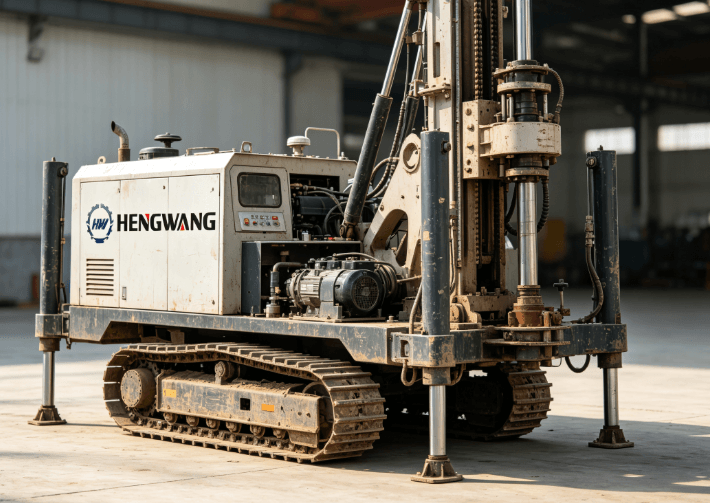
Working directly with an OEM drilling rig manufacturer can simplify communication between the buyer and the engineering or production team. It can also make it easier to discuss machine configurations, optional equipment, spare parts, and project-specific requirements.
This can be useful for contractors, distributors, and equipment buyers that need more than a standard machine.
However, OEM cooperation should still be evaluated through technical documentation, production capability, quality control, commercial terms, and after-sales support. Buyers should confirm which components can be customized and which specifications remain standard for each model.
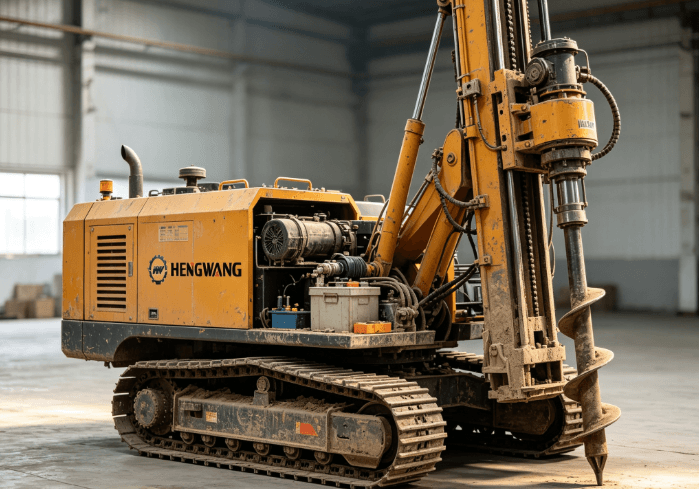
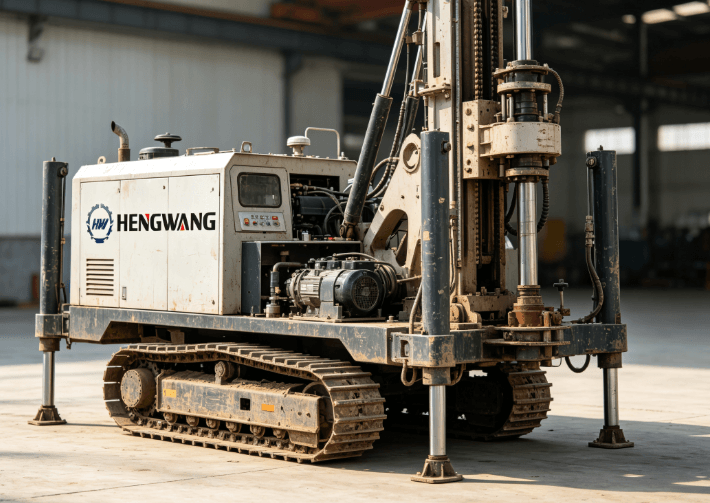
For example, HengWang provides a range of drilling rigs covering different applications and configurations. Reviewing the available models before contacting the manufacturer can help buyers prepare a more specific RFQ.
1. Match the Drilling Rig to the Application
Before comparing suppliers, define the actual drilling conditions and equipment requirements.
Your specification should include:
- Required drilling depth
- Target hole diameter
- Soil and rock conditions
- Drilling method
- Required mobility
- Available power source
- Drill pipe and tooling requirements
- Expected operating hours
- Quantity and delivery schedule
For example, the HW-160L Hydraulic Drilling Rig is listed with a 160 m drilling depth, 75–325 mm drilling diameter range, and 13.2 kW rated power. Its published specifications also include machine dimensions, weight, vertical shaft speed, and lifting parameters.
This provides a useful example of how buyers can compare complete machine specifications rather than focusing only on the headline drilling depth. The final configuration should still be matched to the project’s geological conditions and drilling requirements.
For buyers considering other hydraulic configurations, the HengWang hydraulic drilling rig range provides additional models for comparison.
2. Check Manufacturing and Customization Capability
An OEM relationship is most useful when the manufacturer can clearly explain its production and engineering capabilities.
During supplier qualification, ask:
- Where are the main manufacturing and assembly processes carried out?
- Which components are manufactured in-house and which are sourced?
- What lead time applies to standard and customized models?
- What engineering changes can be supported?
- How are customized specifications documented and approved?
- What factory testing is performed before shipment?
For projects requiring different drilling methods, buyers can compare equipment categories rather than requesting the same machine configuration from every supplier.
For example, HengWang’s pneumatic drilling rigs include models such as the HQZ-180L. The HQZ-180L Pneumatic Drill Rig is listed with a 180 m drilling depth, 130–254 mm drilling diameter, 42 kW engine power, rubber-track chassis, and 12-ton lifting power.
The example shows why the supplier should explain the relationship between the machine configuration and the intended application rather than simply provide a price.
3. Evaluate Spare Parts and After-Sales Support
The purchase price is only one part of the cost of owning a drilling rig.
Before placing an order, ask the manufacturer about:
- Spare-parts catalogs and part numbers
- Common replacement parts
- Expected restocking times
- Warranty coverage
- Technical documentation
- Operator training
- Remote troubleshooting
- Local service or distributor support
This is particularly relevant for international projects, where replacement parts may need to be shipped from the manufacturer’s facility.
Ask suppliers whether commonly replaced components are available from stock, how parts are identified, and what information is required when ordering replacements.
4. Consider the Product Range and Project Requirements
Different drilling applications require different equipment configurations. Geological exploration, water-well drilling, DTH drilling, anchoring, and horizontal directional drilling should not automatically be evaluated using the same criteria.
For exploration projects, buyers can review HengWang’s geological exploration drilling rigs, which include models such as the HW-1000GL, HW-200XL, HW-400XL, HW-600XL/GL, HW-800S/GL, HW-B30, HW180D, and XY-1A.
For larger-depth hydraulic drilling requirements, the XY-3 Hydraulic Drilling Rig is another example. HengWang lists a 600 m drilling depth, 75–325 mm drilling diameter range, and 42 kW rated power for this model.
These examples do not mean that one model is suitable for every project. Instead, they show why buyers should first define the application and then compare models based on their complete technical configuration.
5. Use a Practical Supplier Evaluation Table
| Evaluation Factor | Buyer Question | Potential Warning Sign |
|---|---|---|
| Production | What is the expected production lead time for this model? | No clear production schedule |
| Technical Fit | Which model matches the required depth and diameter? | Recommendation without technical justification |
| Customization | Which components or configurations can be modified? | Changes discussed only verbally |
| Spare Parts | Can you provide part numbers and restocking times? | No parts list or support process |
| Quality Control | What inspections and factory tests are performed? | No defined inspection procedure |
| Export | Which shipping and export documents are available? | Documentation responsibilities are unclear |
| Warranty | What does the warranty cover? | Warranty terms are not included in the quotation |
| Inspection | Can a buyer-appointed inspector check the machine? | Inspection access is unclear |
Using the same checklist for every shortlisted supplier makes quotations easier to compare and reduces the chance that important commercial or technical details are overlooked.
Contract, Inspection and Export Checkpoints
Before signing the purchase contract, make sure the agreed specification is included in the commercial documents.
At minimum, clarify:
- Machine model and configuration
- Scope of supply
- Optional equipment and accessories
- Spare parts
- Production and delivery schedule
- Inspection and acceptance requirements
- Warranty terms
- Payment milestones
- Incoterms
- Packing requirements
- Export documentation
- Responsibility for defects and corrective action
For larger orders, a factory audit or pre-shipment inspection can provide an additional verification step.
Buyers should also review applicable machinery and workplace safety requirements for the destination market. For general drilling-site safety information, the U.S. Occupational Safety and Health Administration (OSHA) provides guidance covering drilling operations, equipment, and maintenance.
Questions to Ask an OEM Drilling Rig Manufacturer
Before requesting a quotation, prepare a short technical brief covering:
- Application: water well, geological exploration, construction, mining, or another use.
- Drilling requirements: target depth and hole diameter.
- Ground conditions: soil, rock, or mixed formations.
- Mobility: crawler, truck-mounted, or another configuration.
- Power: engine, motor, pneumatic, or hydraulic requirements.
- Quantity: single machine, small batch, or ongoing supply.
- Destination: country and delivery location.
- Customization: required accessories or configuration changes.
- Delivery: preferred production and shipping schedule.
Providing these details gives the manufacturer enough information to recommend a more relevant configuration and prepare a more useful quotation.
Frequently Asked Questions
How do I verify an OEM drilling rig manufacturer?
Start with company registration, manufacturing information, technical documentation, quality-control procedures, references, and export experience. For larger purchases, consider a factory audit or independent inspection before shipment.
What should I compare when buying a drilling rig?
Compare drilling depth, hole diameter, drilling method, power, mobility, machine dimensions, tooling compatibility, spare-parts support, warranty, delivery terms, and total ownership cost.
Is customization important when buying directly from an OEM?
It can be important when a standard configuration does not match the project. Ask the manufacturer which components can be customized and require approved changes to be documented before production.
How can I compare drilling rig quotations?
Use the same technical specification and commercial requirements for each supplier. Compare the complete scope of supply rather than the headline machine price, including accessories, spare parts, packaging, shipping terms, documentation, and warranty.
When should I request a factory inspection?
For higher-value orders or new supplier relationships, an inspection before shipment can help verify machine configuration, workmanship, documentation, and packing against the agreed purchase requirements.
Start Evaluating an OEM Drilling Rig Manufacturer
Choosing an OEM drilling rig manufacturer should come down to the fit between the machine, the project, and the supplier’s ability to support the equipment after delivery.
Start by defining your drilling requirements, then compare manufacturers on technical capability, customization, production schedule, spare-parts support, inspection procedures, export documentation, and total ownership cost.
You can review the HengWang drilling rig product range to compare available equipment and configurations. If you already know your required drilling depth, diameter, application, and destination country, you can also contact HengWang with these details to discuss a suitable machine configuration and quotation.
A clear RFQ and a complete technical specification can make the supplier comparison process more efficient and give both sides a better basis for discussing the right drilling rig for the project.