The construction industry increasingly demands speed and flexibility on diverse job sites. Wheeled excavator advantages have become a focal point for contractors seeking to optimize project timelines. Unlike traditional tracked versions, these machines utilize rubber tires for movement and stability. This design offers a unique blend of power and mobility for specific environments.
Choosing the right machinery can significantly impact your operational costs and productivity. Understanding these benefits helps project managers make informed equipment investments. This guide explores why wheeled models are gaining popularity in modern infrastructure development.
Why Mobility is a Key Advantage of Wheeled Excavators?
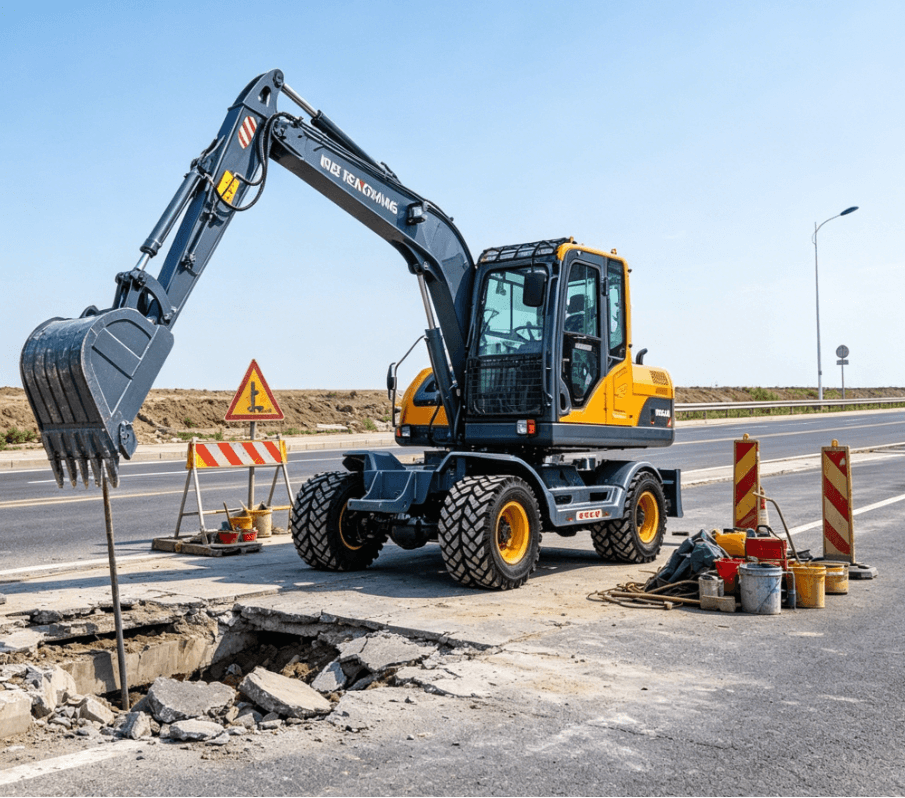
The primary benefit of a wheeled excavator is its ability to travel independently. These machines can reach speeds between 25 and 35 kilometers per hour. This eliminates the need for specialized transport trailers for short distances. Operators can drive the unit directly from one work zone to another.
On-road capability saves significant time during the workday. You do not have to wait for a low-boy truck to arrive. This mobility is essential for utility repairs and roadside maintenance tasks. It allows a single machine to cover multiple small sites in one shift.
Furthermore, independent travel reduces logistics expenses for the fleet owner. Transporting heavy equipment often involves high fuel and labor costs. Eliminating these steps increases the overall profitability of a project. Speed and independence define the modern wheeled excavator’s value proposition.
Core Wheeled Excavator Advantages in Urban Environments
Urban construction sites present unique challenges such as tight spaces and sensitive surfaces. Wheeled excavator advantages shine when working on finished asphalt or concrete roads. The rubber tires prevent the surface damage typically caused by steel tracks. This makes them ideal for city street repairs and landscaping.
Many modern models feature a compact swing radius. This allows the machine to operate within a single traffic lane. It minimizes disruptions to public transportation and local commuters. Efficiency in tight quarters reduces the need for extensive road closures.
Noise reduction is another critical factor in populated areas. Wheeled units generally produce less vibration and ground noise than crawler models. This helps contractors adhere to strict local noise ordinances. These machines offer a “neighbor-friendly” approach to heavy construction work.
| Feature | Wheeled Excavator | Crawler Excavator |
| Top Travel Speed | 25–35 km/h | 3–6 km/h |
| Surface Impact | Low (Rubber Tires) | High (Steel Tracks) |
| Undercarriage Life | Long (on hard surfaces) | High Wear (on rock/pavement) |
| Stability | High (with outriggers) | Excellent (low center of gravity) |
| Logistics | Drive to site | Requires transport trailer |
Enhancing Stability and Performance with Technology
A common misconception is that wheeled excavators lack the stability of tracks. However, modern engineering utilizes hydraulic outriggers and dozer blades to create a solid base. When these stabilizers are deployed, the machine provides a firm platform for heavy lifting. This setup ensures safety during high-reach or deep-digging operations.
The lifting capacity of these machines is often comparable to tracked counterparts. Advanced hydraulic systems allow for smooth and precise movements. Operators can handle heavy concrete pipes or steel beams with high accuracy. This precision is vital for complex utility installations.
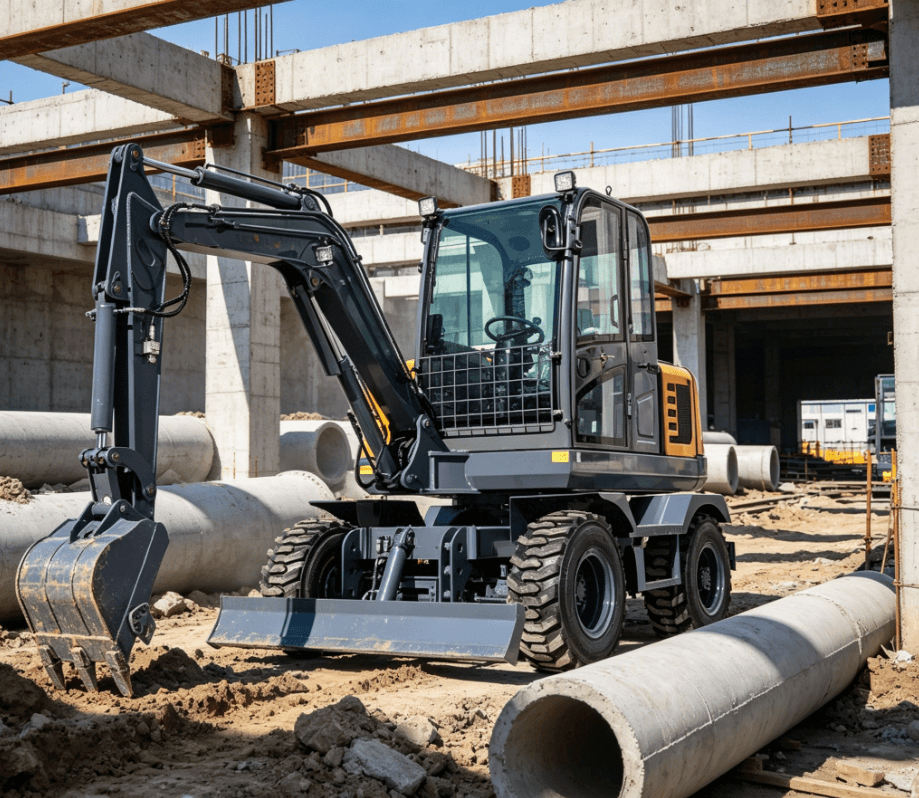
Data shows that wheeled models can reduce undercarriage maintenance costs by nearly 15%. This is especially true when working primarily on hard ground. Tires are cheaper to replace and maintain than complex track chains and rollers. This long-term savings is a major financial advantage for growing businesses.
Versatility Through Advanced Attachment Integration
Versatility is a hallmark of the modern wheeled excavator. These machines function as a “Swiss Army knife” on the construction site. They support a wide range of attachments beyond the standard digging bucket. You can easily switch to hydraulic hammers, grapples, or augers.
Quick-coupler systems allow for attachment changes in just a few minutes. This allows a single machine to handle excavation, demolition, and material handling. The ability to transition between tasks quickly keeps the project moving forward. It reduces the total number of machines required on-site.
Furthermore, many units now feature specialized auxiliary hydraulics. This provides the necessary power for high-performance tools like mulchers or shears. The combination of high mobility and tool variety is unmatched. Investing in a wheeled unit provides a multifunctional asset for any fleet.
How to Determine If a Wheeled Excavator Fits Your Project
Choosing the right equipment requires a clear understanding of your site conditions. If your project involves frequent travel between multiple locations, wheels are superior. Consider the distance between your work zones and the availability of transport. Wheeled excavator advantages are most evident when roading is a daily necessity.
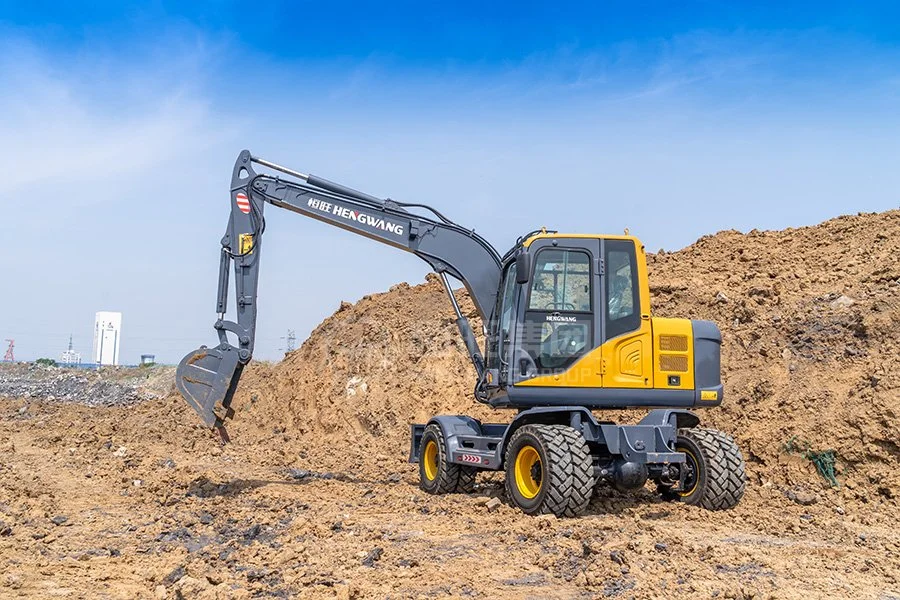
Assess the ground surface before making a final decision. Soft, marshy, or extremely steep terrain may still require the traction of tracks. However, for roadwork, bridge maintenance, and urban utility projects, wheels are the standard. They offer the best balance of speed, surface protection, and power.
It is also important to evaluate the total cost of ownership. Analyze fuel consumption, tire wear, and the potential savings on transport trailers. Reliable manufacturers provide detailed performance data to help you calculate these metrics. Selecting a machine that aligns with your specific operational needs ensures long-term success.
You can explore a variety of high-performance models by visiting the Hengwang Excavator Category. Comparing different specifications will help you identify the ideal machine for your upcoming projects.
Summary
The wheeled excavator advantages include high travel speeds, reduced surface damage, and lower transport costs. These machines excel in urban settings where mobility and precision are paramount. By selecting a model with the right stabilization and attachments, you can significantly enhance your job site productivity and efficiency.
FAQ
Are wheeled excavators as stable as crawler excavators?
Yes, they are highly stable when using hydraulic outriggers and dozer blades. These stabilizers provide a wide, firm base that allows for heavy lifting and deep digging without tipping.
Can a wheeled excavator be driven on public roads?
Yes, most wheeled excavators are designed to be street-legal in many jurisdictions. Their rubber tires and integrated lighting systems allow them to travel between sites without a trailer.
What is the main maintenance difference between wheels and tracks?
Wheels generally require less frequent and less expensive maintenance on hard surfaces. Replacing tires is faster and more cost-effective than replacing an entire steel track system or undercarriage components.
Which industries benefit most from wheeled excavators?
Road construction, urban utility repair, and landscaping industries benefit the most. Their ability to move quickly without damaging pavement makes them perfect for city-based infrastructure projects.
Reference Sources
Association of Equipment Manufacturers (AEM): https://www.aem.org/
Construction Equipment Magazine: https://www.constructionequipment.com/
For Construction Pros: https://www.forconstructionpros.com/