Choosing a mini excavator manufacturer involves more than comparing machine prices. For dealers, rental companies and contractors, it is also important to consider whether the machine fits the intended work, how replacement parts are supplied, and what technical support is available after delivery.
A practical supplier review should therefore look at product configuration, manufacturing capability, parts support, lead time and after-sales communication before an order is placed.
What to Check When Comparing a Mini Excavator Manufacturer
Different buyers may have different priorities. A rental company may focus on maintenance and parts availability, while a dealer may also consider model range, configuration options and long-term supplier support.
Five areas are worth checking before requesting a quotation.
1. Product range and machine configuration
Start by checking whether the manufacturer offers models that match the applications you actually serve.
Landscaping, residential construction, utility work and other restricted-access projects may require a compact machine with suitable dimensions and attachments. Dealers may also prefer access to several machine sizes rather than relying on a single model.
Hengwang’s excavator product range includes mini and crawler excavators, providing a useful starting point for comparing available models.
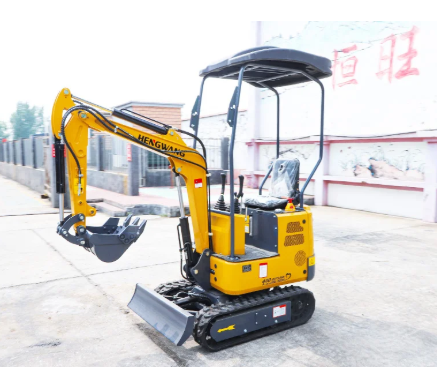
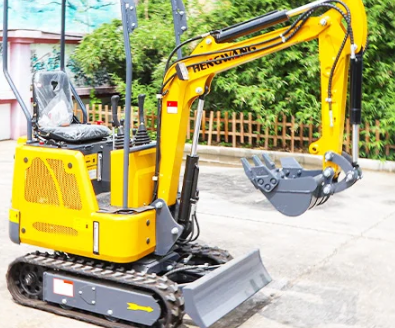
As a specific example, the HW-12 Mini Excavator has an operating weight of 1,000 kg, a 0.025 m³ bucket capacity and 8.2 kW rated power. Its compact format may suit applications where access and machine size are important considerations. Buyers should still confirm the working range, attachments and configuration for their particular application.
If you are still comparing machine sizes, our guide to excavator sizes can help narrow the initial selection before contacting a supplier.
2. Manufacturing and quality control
A supplier’s production capability is worth checking before discussing repeat orders or dealership cooperation.
Rather than asking only whether a company is a “factory,” ask more specific questions:
- Which excavator models are produced or assembled in-house?
- Which major components are sourced from outside suppliers?
- What inspections are carried out before shipment?
- Are production or serial-number records available?
- Can the supplier provide technical and maintenance documentation?
The answers provide a more useful picture of the manufacturer’s production process than general marketing statements.
3. Spare parts and after-sales support
For equipment buyers, support after delivery can be as important as the initial machine price.
Before ordering, ask about:
- Common replacement parts and availability
- Parts ordering procedures
- Typical parts lead times
- Warranty terms
- Troubleshooting support
- Technical manuals and parts diagrams
Rental companies should also identify regular wear items and ask whether recommended spare-parts or maintenance kits are available.
For general equipment maintenance safety information, the NIOSH Equipment Safety: Maintenance Toolbox Talk provides a useful reference when developing maintenance and training procedures.
4. Lead time and ordering requirements
Price comparisons become more useful when the ordering conditions are clear.
Ask the supplier to confirm:
- Minimum order quantity, if applicable
- Production lead time
- Shipping preparation time
- Available machine configurations
- Attachment options
- Packaging and loading arrangements
For dealers, these details can help determine whether a supplier is suitable for regular inventory replenishment rather than only a one-time purchase.
5. Safety and operating documentation
A mini excavator should be evaluated together with its operating and maintenance requirements.
Buyers should also consider the safety requirements that apply to their market and jobsite. OSHA’s Trenching and Excavation Safety resources provide general information on excavation hazards and safe work practices.
These resources are general safety references rather than product-specific operating instructions. Operators should follow the machine manufacturer’s manuals and the regulations applicable to the worksite.
Mini Excavator Supplier Comparison Checklist
| What to compare | Questions to ask |
|---|---|
| Machine range | Which models match my applications and target market? |
| Configuration | What engines, controls and attachments are available? |
| Production | Which models and components are produced or assembled in-house? |
| Parts | How are replacement parts ordered and supplied? |
| Lead time | What is the normal production and delivery schedule? |
| Documentation | Are manuals, parts lists and maintenance information available? |
| Warranty | What does the warranty cover and how are claims handled? |
| Dealer support | What information and technical support can the supplier provide? |
Using the same checklist for several suppliers makes it easier to compare quotations on more than the initial purchase price.
How to Prepare a Better Inquiry
A supplier can usually prepare a more relevant quotation when the initial inquiry includes enough practical information.
Instead of sending only “Please send your best price,” include:
- The mini excavator model or operating-weight range you are considering.
- Intended application, such as landscaping, construction, utility work or rental.
- Required attachments or configuration.
- Estimated order quantity.
- Destination country or region.
- Target delivery schedule.
- Spare-parts and after-sales requirements.
For example, if you are considering the HW-12 Mini Excavator, you could ask the supplier to confirm the available configuration, attachment options, lead time, warranty terms and recommended spare-parts package for your market.
This gives both sides a clearer starting point for discussing the order.
When to Contact a Mini Excavator Manufacturer
If you already know the approximate machine size, application and quantity you need, it is usually more productive to contact the manufacturer with those details rather than requesting a general product catalog.
For buyers who are still comparing their options, our mini excavator buying guide covers the main factors to consider when narrowing down a model.
Rental companies may also find it useful to review compact excavators for rental fleets before deciding which machine specifications and support requirements should be included in an inquiry.
For dealers and rental companies, a first inquiry can focus on model selection, quotation, lead time, parts support and dealer cooperation. Contractors can instead provide the working environment, required attachments and expected operating conditions.
You can start by reviewing the Hengwang excavator range and then use a specific model such as the HW-12 Mini Excavator as a reference when preparing your inquiry.
FAQ
What should I ask a mini excavator manufacturer before ordering?
Start with the model specifications, configuration, attachments, lead time, warranty, spare-parts availability and after-sales support. If you are buying for resale or rental, also ask about dealer support and repeat-order arrangements.
How do I compare mini excavator suppliers?
Use the same criteria for each supplier: machine specifications, production capability, parts support, lead time, documentation, warranty and communication. A consistent checklist makes quotations easier to compare.
Is the cheapest mini excavator supplier always the best option?
Not necessarily. The initial machine price is only one part of the purchasing decision. Parts availability, maintenance requirements, downtime and after-sales support can also affect the overall cost of owning or operating the machine.
What information should I include in a quotation request?
Include the machine type or model, application, quantity, required attachments, destination, preferred delivery schedule and any parts or after-sales requirements. More specific information generally makes it easier for a supplier to prepare a relevant quotation.